
Vinnie Heaven takes on everything from queer homelessness to magical queer deer in their third play Faun. Read More

In her new memoir Love and Money, Sex and Death, theorist and professor McKenzie Wark faces these questions. Told as a sequence of letters to everyone from her mom to ex-lovers to herself, she takes readers into her past and the experiences and people who made her what she is today. The book travels from her youth in Newcastle through time spent in China and as a professor in Sydney before ultimately settling in New York City. Read More
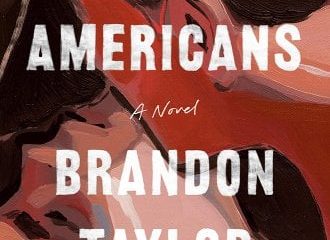
Many writers try, but few capture, as Brandon Taylor does, the aesthetic texture of life under late capitalism in America: its petty cruelties, chewy atmospheres, and taut social relations. More expansive in terms of scope and characterization than his debut, Real Life – in which we view life mainly through the lens of a single protagonist – The Late Americansmakes a tour into, through, and between the lives of a band of troubled souls living in an Iowa college town. Read More

At the time of his death from complications of AIDS in 1984, Michel Foucault was considered one of the 20th century’s most influential intellectuals and philosophers. His work forever changed our understanding of sanity, sexuality, morality, and crime. And yet his life concealed a personal secret that might explain how he first arrived at his profound realizations about society. This secret is finally exposed to light in Foucault in Warsaw – a new book by Remigiusz Ryziński, a writer, gender studies scholar, and professor of philosophy at the University of Warsaw. Nominated for Poland’s most prestigious literary award, Foucault in Warsaw tells its fascinating story through colorful and fast-paced documentary reportage. Read More

As a rural lesbian, I always make it through Pride month with a few difficult questions: Whom can I count on? Where can my wife and I go? Who’s calling themselves an ally, and who’s “reclaiming” the rainbow? At the heart of these and similar questions is how I am intimately — or violently — connected to the people and places around me. Read More
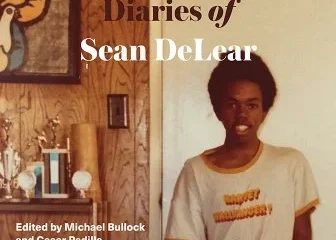
On January 1, 1979, a Black queer fourteen-year-old committed to writing in his new diary every single day of the coming year and just about did. The teen lived in Simi Valley, a suburb north and west of Los Angeles, where Reagan would build his presidential library, where the police who beat Rodney King in 1991—on video—would be acquitted of all charges the following year. Simi Valley wasn’t just majority white; it was a Klan stronghold and home to so many (white) LAPD officers the locals called it “Copland.” 1979 was the year of the Iran hostage crisis, rising gas prices, peak disco, and the Sony Walkman. Read More
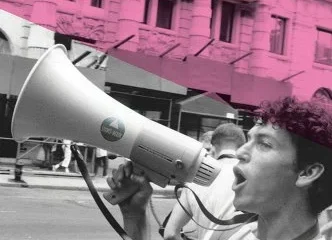
Boy with the Bullhorn is a treasure for every generation, written with personal wit and charm, yet far-ranging enough to inspire anyone who must navigate a hostile political environment. Goldberg has personalized a richly detailed resource for activists today, scholars of medical history, and students of social movements. Rare is the memoir that includes a 91-page index and 32 pages of endnotes, but Goldberg has managed to incorporate these tools while engaging the reader with his deeply personal story. Read More

In Robyn Gigl’s third novel in the Erin McCabe legal thriller series, we find Erin surrounded by a hellscape of villainous men. She can hardly turn around without one or more of them trying to frame her for crimes she didn’t commit, ruin her reputation as an honorable and highly skilled lawyer, or, quite often, kill her. Read More

Manuel Ulacia (1953 – 2001) was the grandson of Manuel Altolaguirre and Concha Mendez, two artists in Spain’s “Generation of ’27,” associated with the liberal leftist reform movement of Spain and persecuted by Franco at the start of the Spanish Civil War. Ulacia’s family first fled to Cuba and then settled in Mexico, where the poet was raised. Manuel received a master’s and Ph.D. in Hispanic literature at Yale in the 1970s, where he specialized in the poetry of the gay Spanish poet Luis Cernuda. Ulacia would then return to Mexico, teach at the Universidad Nacional Autonoma de Mexico, become a protégé of Octavio Paz, and eventually become president of PEN’s Mexico chapter, where he actively supported dissident writers. Furthermore, Ulacia was gay. He died in 2001 at age 48, swept out to sea while swimming off a Mexican beach. Read More