
Poetry and death have long been intertwined, a tradition that finds its place in times of crisis and offers solace to individuals and communities. The anthology Against Forgetting: Twentieth-Century Poetry of Witness (1993) stands as a testament to the power of poetry in bearing witness to the harrowing events of the 20th century. Carolyn Forché’s introduction creates a framework for understanding poetry’s role amidst suffering. She depicts a poet’s unique perspective, capturing the unflinching portrayals of poets throughout the 20th century.
Their work underscores the power of inclusion and belonging and highlights the interconnectedness of history, language, and human experience at the core of poetic expression.
In its myriad forms, death has always found a voice in poetry. While lyric poems often dominate, the elegy remains the most fitting form to address death. In the 1980s and 1990s, poets Mark Doty, Thom Gunn, Tory Dent, Marie Howe, and Rafael Campo explored themes of grief, AIDS, love, and death, shaping a deeply rooted tradition. Their work underscores the power of inclusion and belonging and highlights the interconnectedness of history, language, and human experience at the core of poetic expression.
Reflecting on such elegiac poetry, in his 1949 essay, “Cultural Criticism and Society,” Theodor Adorno cautioned against the potential of art to make traumatic events too palatable and commodified. His assertion that “to write poetry after Auschwitz is barbaric” emphasizes his apprehension about the artistic portrayal of trauma and the risk of trivializing unspeakable horrors. Adorno opens the door to the relationship between culture, storytelling, and brutality.
They’re still within the air’s reach,
within the compass of places
that have just now opened.
I can do only two things for them—
describe this flight
and not add a last line.
Nobel Laureate Wisława Szymborska, known for her evocative poetry, captures the essence of a moment suspended in time in “Photograph from September 11”:
In its refusal to conclude, this poem remains perpetually anchored to that fateful moment, a testament to all who bore witness. Poetry has long served as a beacon in moments of crisis, offering readers consolation and a shared memory. The poetic responses to tragedies, such as the September 11th attacks, encapsulate loss, and provide a collective remembrance. Yet, while such poetry captures global sentiments, there’s a need to focus on the narratives that resonate within specific communities.
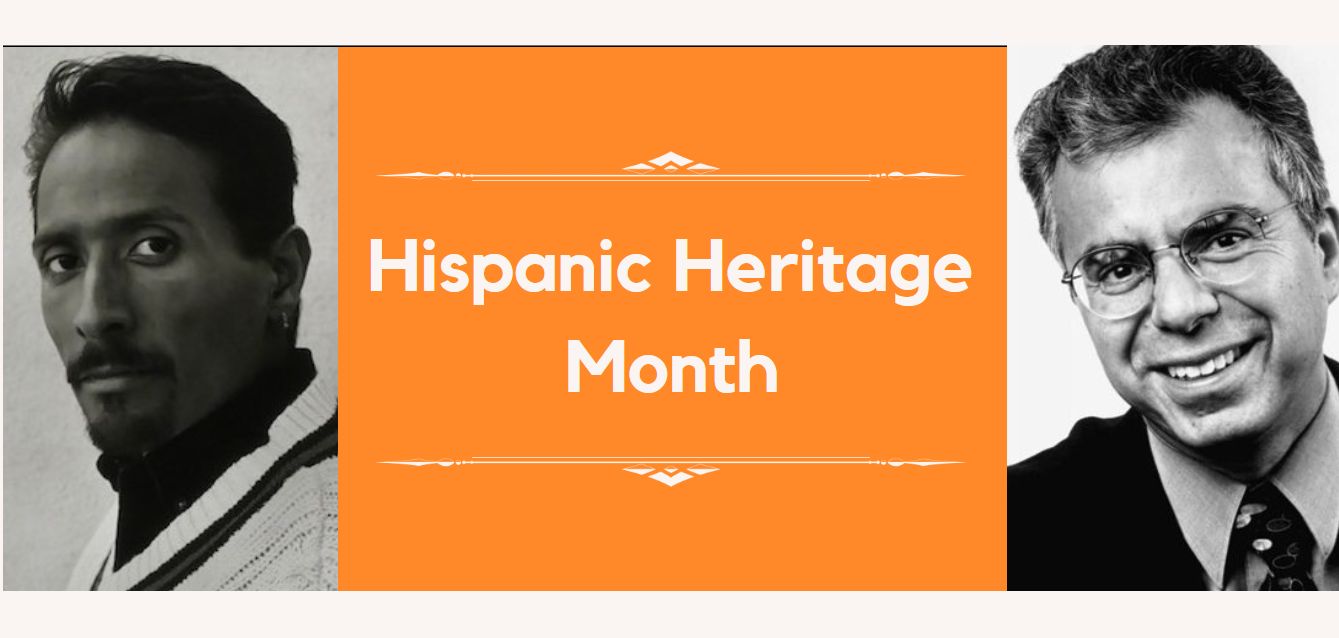
Just as poets of the 20th century bore witness to global tragedies, poets like Gil Cuadros and Rafael Campo bear witness to personal and communal struggles. Cuadros is a voice that resonates in this intricate framework. For instance, the LGBTQ+ community has its tales of resilience, identity, and belonging. To be included in these expressions, to belong is permission-giving. Poetry has long been a haven for Hispanic writers, giving marginalized voices a platform where their stories, struggles, and identities resonate.
In his publication City of God (1994), Gil Cuadros constructs thought-provoking meditations on the queer body, the AIDS epidemic, and the desire for acceptance. The year of its publication, the CDC (Center for Disease Control and Prevention) published its “Guidelines for Preventing Transmission of Human Immunodeficiency Virus Through Transplantation of Human Tissue and Organs” (May 20, 1994), offering the population guidance for preventing the transmission of HIV for the first time. His work, juxtaposed against the CDC’s guidelines on HIV transmission, provides an unfiltered look into the lives of LGBTQ+ individuals.
I can feel my body becoming tar, limbs divide, north and south. My house smells of earth and it rumbles from the traffic above. White clay sifts through the ceiling. My bones shine in the dark.
Gil Cuadros, “My Aztlan: White Palace”
In the prose poem “My Aztlan: White Palace,” Cuadros portrays a city in flux, where modernity overshadows memories, yet the desire for connection remains:
Driving the San Bernadino is the closest I get to Mecca. I was born below this freeway, in a house with a picket fence now plowed under. It was the same street my uncle and tia lived on. I shut off the radio, quietly pass the church, a pharmacy, a corner gas station where Dad pumped tanks full of ethyl while I collected two of every animal for an ark.
…
I imagine the house still intact, buried under dirt and asphalt, dust and neglect. Hidden under a modern city, this is my Aztlan, a glimpse of my ancient home, my family.
…
I can feel my body becoming tar, limbs divide, north and south. My house smells of earth and it rumbles from the traffic above. White clay sifts through the ceiling. My bones shine in the dark.
Like many others, this poem focuses on challenges, navigating the intersections of cultural identity and sexuality. The poem opens after his experiences in West Hollywood bars, leading to his drive home. In gay bars, the interactions with individuals who don’t understand or appreciate their heritage and the longing for a sense of belonging are all too familiar for many. Poetry is a platform for stories, struggles, and identities to resonate.
In 1981, the AIDS epidemic began its devastating march through America. The first case was announced on June 5, and 337 cases were reported by December. Yet, the CDC estimates that 42,000 individuals were HIV positive without even being aware. The AIDS crisis set against the legacy of post-WWII America, an era marked by an ideologically driven government that continued to oppress non-white, heterosexual people. Television programming like The Adventures of Ozzie and Harriet (1952-1966), Father Knows Best (1954-1960), Leave It to Beaver (1957-1963), and The Donna Reed Show (1958-1966), perpetuated white cultural ideals for decades after its concluding episode. Yet, television also has the power to challenge and reshape societal views.
As the television characters engage in the leisurely activity of golf, enjoy the taste of high-quality steaks, and dress in fashionable clothing, the speaker struggles to reconcile these fictional storylines with his lived experiences.
In Gary Soto’s Where Sparrows Work Hard (1981), Soto voices identity’s intricacies and relationship to television. In “TV in Black and White,” the speaker recollects his youth, distinguished by a stark contrast between the wealthy lives depicted on TV shows like The Donna Reed Show and Ozzie and Harriet and his actual reality. As the television characters engage in the leisurely activity of golf, enjoy the taste of high-quality steaks, and dress in fashionable clothing, the speaker struggles to reconcile these fictional storylines with his lived experiences. His real-life experience is laboring in cotton fields, a world removed from the broadcast glamour. Nevertheless, when the power goes out, the issues that existed before come to the surface:
A store front might
Be smashed, sack may find
Hands, a whistle
Point the way.
And if someone steps out
With a black and white TV,
It’s because we love you Donna,
We miss you Ozzie.
In 1994, an openly gay man living with HIV, Pedro Zamora’s candid discussions about his life, health, and advocacy work humanized the HIV/AIDS experience for countless viewers of MTV’s The Real World: San Francisco. His appearance exemplified the transformative potential of television. Just as television brought the realities of the AIDS crisis into people’s homes, poetry has become a powerful voice for the Hispanic population, communicating their difficulties, joys, and experiences.
Whether told through television or poetry, storytelling links us. Both mediums can evoke emotions, allowing us to explore and make sense of the complexities of the world around us. They offer a refuge for those who listen and a means to speak the unspeakable, challenge societal norms, and create a culture of belonging.
Sharing experiences has become a beacon for those seeking connection and understanding as we navigate an age of heightened empiricism, where facts and numbers frequently predominate. Poetry shapes our collective consciousness with its ability to capture raw, lived experiences, and television with its power to bring those experiences into our living rooms.
Being inclusive and creating a culture of belonging is an ethical imperative for the longevity of poetry.
Human diversity is at the heart of American poetry. American poets have influenced our perspective on the world and understanding of each other. Being inclusive and creating a culture of belonging is an ethical imperative for the longevity of poetry. For Philip Metres, in “order to survive such moments, we need to glean the present and past for what might sustain us for the work ahead” (The Sound of Listening: Poetry as Refuge and Resistance). The history and language of LGBTQ+ people are integral to a people’s future.
The literary contributions of Gil Cuadros serve as poignant reminders of the importance of representation and its profound impact on cultural perceptions and attitudes. Poetry offers an escape from self-consciousness through emotion and storytelling. Or, as Matthew Salesses describes in his book Craft in the Real World, we make collections of poetry “to make conscious what may start as unconscious” (XVII). For Gil Cuadros, his poems were rebellious and sex-positive, yet self-aware of their own racialized gay ideological description. In the poem “Unprotected,” he says,
His chest billowed like a sail…My wrists were held down by the weight of his hands and body. He sat on my chest and I could smell his cock a few inches from my face, taunting me. He told me, “Suck that dick,” and I did. I didn’t even hesitate. I swallowed him like meant. It made me choke. “You like that big dick don’t you?” I nodded. I seemed enormous, really too big. I began to split in half” (“Unprotected” 68-69).
Such vivid descriptions showcase Cuadros’ talent and highlight the complexities of LGBTQ+ experiences. Transitioning from this intimate portrayal, Cuadros further subverts the status quo in “Dear Richard,” where he reminisces about a shared queer upbringing and the naturalness of their same-sex desires.
Little did I know that we’d both grow up queer…Back at school I always made you late…on my knees, a growth of hair already sprouted at your base. A topographical map, I wanted to press in the gradient mountains, scratch the cradle of land, trace the blue river veins, the Tigris, Euphrates, and drink. It was natural to have you inside my mouth” (105).
Cuadros’ expressive poems offer a glimpse into the LGBTQ+ experience, defying society’s standards and praising the beauty of his brave exploration of same-sex desire. These private recollections embody the gay community’s perseverance and defiance in the face of hardship.
…Rendering death and dying as an opportunity to render people with unmatched eloquence, to retell their lives, to write the poems that will last forever in the troubled minds of future generations who will look back on the pandemic.
Just a year earlier, in his essay published in 1993, “AIDS and the Poetry of Healing,” Rafael Campo writes about rendering death and dying as an opportunity to render people with unmatched eloquence, to retell their lives, to write the poems that will last forever in the troubled minds of future generations who will look back on the pandemic.
For Campo, “Poetry allows us to say what can’t be said, speak the unspeakable, and refuse to be silenced. It’s a way to connect to others through our shared capacity for voice, and it helped me represent my authentic, equally human experience to people who might have judged or stereotyped me.”
Rafael Campo is a physician at Harvard Medical School. He’s also a poet. His debut collection, The Other Man Was Me (Arte Público Press, 1994), won the 1993 National Poetry Series Award. He’s the author of ten books of poetry and essays. A Cuban, Jewish American, and queer poet, Campo writes about the intersection of poetry and empathy as a physician. He writes:
I am grateful for the poetry written about AIDS, in that it has helped me so generously to locate myself in a world irrevocably altered by the virus. In contrast, the place where I went first for guidance—my medical education—at times steered me away from dealing with AIDS, even working with AIDS patients… AIDS, in the process of rendering people almost unable to talk, filling lungs with secretions and opportunistic infections, has at the same time brought the same people an opportunity for an unmatchable eloquence, to retell their lives, to write the poems that will last forever in the troubled minds of future generations who will look back on the epidemic (95-100).
Campo’s poems employ tradition or inherited forms, but his medical practice and experience with the HIV/AIDS epidemic center his writing. The role of poetry during the HIV/AIDS epidemic reveals its therapeutic and connective power. The power to speak the unspeakable and overcome divisions demonstrates the unequaled potential to heal, unite, and inspire.
Poetry emerges as a sanctuary, allowing individuals to voice their realities and find solace in shared experiences.
Poetry is a valuable tool that serves as an artistic expression and a record of life. It preserves moments, emotions, and experiences that might otherwise be lost to history. In the vast realm of poetry, there isn’t enough time to cover every poet or every poem. However, the confluence of LGBTQ+ poets, both past and present, provides a unique lens through which we can view the world. Through their words, we gain insights, understanding, and a deeper appreciation for the stories that shape our world. Poetry emerges as a sanctuary, allowing individuals to voice their realities and find solace in shared experiences.
When we consider the achievements of Latinx poets, we learn that their writings are lifelines, conserving memories, questioning traditions, and paving the way for future generations. The poetry of Cuadros and Soto exemplifies the transformational power of words for those navigating the difficulties of identity, desire, and cultural expectations. Their poems remind us of the ability of the human spirit to overcome obstacles. In a world that frequently strives to silence minority voices, the ongoing legacy of poets such as Gil Cuadros and Gary Soto asks us to listen to, comprehend, and value the stories that define our collective consciousness.